

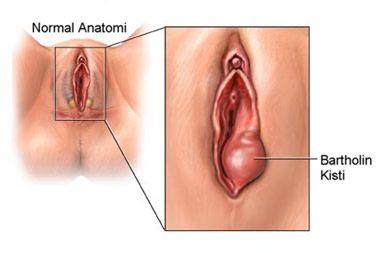
Bartholin's glands are secretory glands located on either side of the vagina, inside the labia minora. These glands, which provide lubrication during sexual intercourse, open into the vagina via thin ducts. Infections or irritations in the area can cause blockages in these ducts, preventing secretions from being expelled and leading to accumulation within the glands, resulting in swelling and cystic formation. If this cystic structure becomes infected for any reason, an abscess develops. This swelling, called a Bartholin's abscess, is most common in women of reproductive age who are sexually active, but it can also occur in virgins.
Symptoms of Bartholin's Abscess
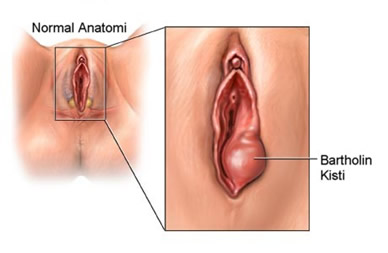 If a Bartholin cyst is very small and uninfected, it may not cause any symptoms. The cyst may remain the same size or it may grow. For example, a small Bartholin cyst can slowly grow to the size of a tangerine. While a Bartholin cyst can cause discomfort during sexual intercourse, if it develops into an abscess, it leads to extremely severe pain, redness, and swelling at the vaginal opening. The pain may be more pronounced when sitting or walking, making it difficult and causing significant discomfort. The pain is quite severe, and painkillers may be ineffective in relieving it. The pain usually persists until the abscess is drained, but in some cases, the abscess ruptures spontaneously, reducing the pain.
Bartholin's Abscess Treatment
The treatment method for abscesses varies depending on the condition of the abscess. In some cases, draining the abscess is necessary, while in others, a procedure called marsupialization is required. Antibiotics may be needed for a period after abscess treatment, and it is very important to take them regularly. However, if a cyst is present, even if the cyst is opened with a scalpel, the duct usually becomes blocked again shortly afterward, and cyst formation is observed in the area. In this case, it may be necessary to completely remove the Bartholin gland. Bartholin abscesses rarely raise suspicion of cancer; especially in older individuals, removal and pathological examination of the abscess is appropriate.


 Turkish
  English