

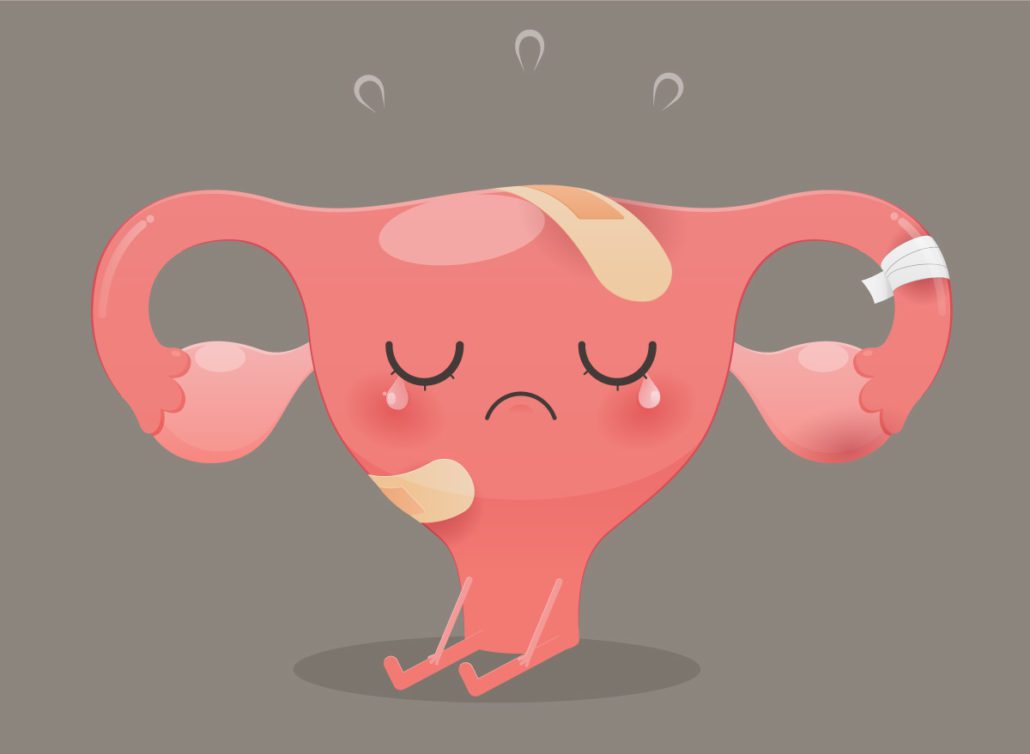
Normally, in a healthy woman, the ovaries are positioned with one end attached to the uterus and the other end free. Blood flows through this connection, but if the ovary twists around the connection in any way, blood flow decreases. In some cases, the flow may stop completely. This condition, called ovarian torsion, is rare but is among the feared and worrying conditions for women.
Ovarian torsion It usually occurs in ovaries that have enlarged due to cysts or other reasons. Sometimes, although rare, it can also occur in normal-sized ovaries due to problems with the fallopian tubes and surrounding tissues. Ovarian torsion, which can also be caused by congenitally excessively long fallopian tubes, often occurs unilaterally and is usually seen on the right side.
Symptoms of Ovarian Torsion
Ovarian torsion typically presents with symptoms such as severe, sudden pain in the lower abdomen, cramping, nausea, and vomiting. The most common symptom is sudden abdominal pain. The pain is caused by the ovary twisting around itself, reducing blood flow. This reduced blood flow decreases the amount of oxygen reaching the tissues, so the pain intensifies as the condition progresses.
Diagnosis and Treatment of Ovarian Torsion
Ovarian torsion is discovered during examinations for complaints of severe pain. However, since the patient's pain is typical and can indicate many conditions, an ultrasound is necessary. On ultrasound... diagnosis of ovarian torsion an ovary that is larger than normal and cystic in order to be implanted This should be monitored. However, a decrease in blood flow to the ovary may be observed on ultrasound.. In ovarian torsion, a definitive diagnosis is made by directly observing the ovary through laparoscopy.
Treatment of ovarian torsion The treatment involves reversing the torn ovary and fallopian tube, returning them to their normal position. One of two surgical methods, laparoscopy or laparotomy, is performed. Painkillers may be given to relieve the patient's pain until the operation takes place. In cases diagnosed early, there is no permanent damage after surgery, but if the condition is neglected and progresses, necrosis may occur in the ovarian tissue. In this case, the entire ovary must be removed.
Ovarian torsion is a medical emergency, so when a dermoid cyst is diagnosed along with the symptoms listed above, treatment and cyst removal should begin immediately.




 Turkish
  English