

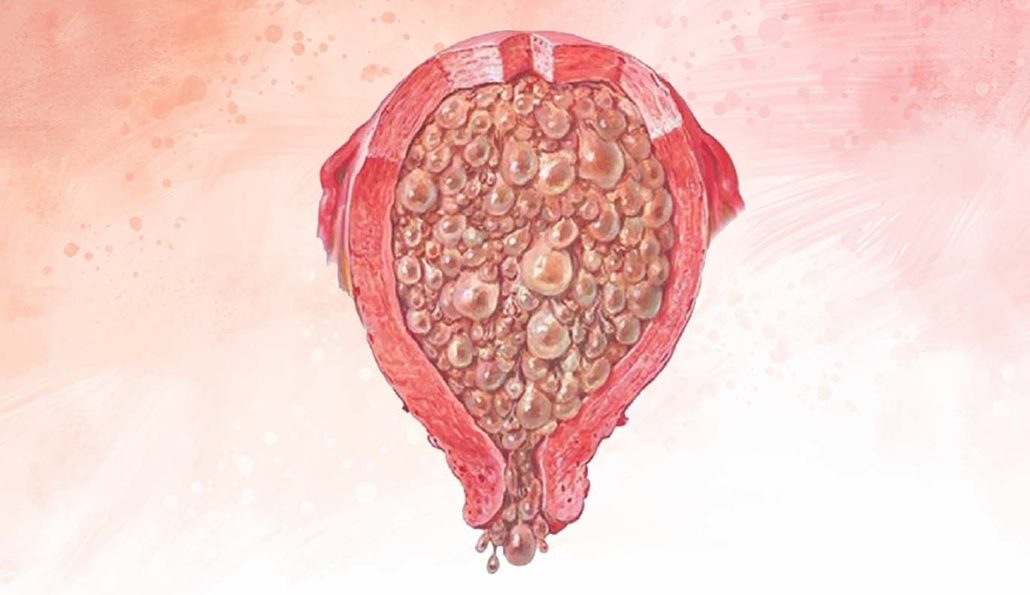
Molar pregnancy, also known as grape pregnancy, is a type of disease originating from the cells that form the placenta and its membranes during embryonic development. In molar pregnancy, the chorionic villi, the projections that connect the placenta to the uterine lining, fail to develop properly. This results in the formation of a hydatiform mass in the uterus instead of a baby. The hydatiform mass is a tumor of placental tissue caused by abnormal chromosomes found in the fertilized egg. Molar pregnancy occurs when two sets of chromosomes from the father fuse with one set of chromosomes from the mother during fertilization, or when the baby does not receive any chromosomes from the mother.
What are the types of molar pregnancy?
There are two types of molar pregnancy: complete and incomplete. In complete hydatiform pregnancy, there are 46 chromosomes, but no embryo is present. All chromosomes come from the father. Fetal circulation does not develop in the blood vessels, and enlargement and swelling are observed in the placental cells. In complete molar pregnancy, fetal development does not occur. In incomplete hydatiform pregnancy, abnormal trophoblast cells are found along with a fetus that has developmental delay and anomalies.
Molar Pregnancy Symptoms
Molar pregnancies typically present with symptoms similar to those of a healthy pregnancy. Some of the symptoms of a molar pregnancy are as follows:
- Morning sickness and vomiting,
- Severe cramps,
- Rapid heartbeat,
- Hypertension,
- Brown discharge,
- Frequent and excessive sweating,
- The uterus being larger than expected,
- The uterus being loose rather than tight,
- Absence of embryonic or fetal tissue
- Increased thyroid hormone levels.
Diagnosis and Treatment of Molar Pregnancy
Molar pregnancy is diagnosed by ultrasound. Additionally, the expectant mother's pregnancy hormone (bhCG) levels are very high. Treatment for molar pregnancy is two-phased. The first phase involves emptying the uterus. The second phase is monitoring. The earlier a molar pregnancy is diagnosed and the uterus is emptied, the lower the risk of complications. Most molar pregnancies can be detected within a few weeks of fertilization. The procedure is different from a normal abortion, so it is extremely important that it is performed by an experienced doctor. Although rare, depending on the patient's age, risk factors, and whether she wants to complete her family, complete removal of the uterus may also be necessary.
Molar pregnancy requires monitoring because of the possibility of malignancy, i.e., cancer. Pregnancy is prohibited for at least one year after a molar pregnancy. bhCG levels are measured in the blood every two weeks. After blood levels return to normal, bhCG levels are measured monthly for six months, and then every two months for at least another six months. If levels remain normal during this period, monitoring is terminated and pregnancy is permitted.






 Turkish
  English