


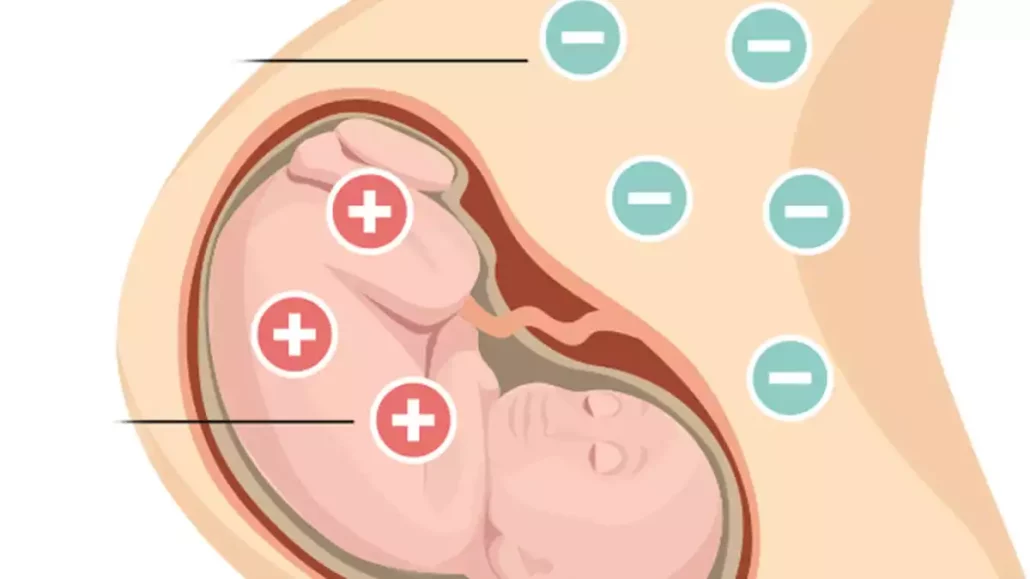
Blood incompatibility occurs when the expectant mother's blood type is Rh negative and her partner's is Rh positive. In such cases, the baby's blood type can be either Rh (+) or Rh (-). An Rh (-) blood type in the baby doesn't pose any problems, but an Rh (+) blood type can lead to certain issues.
Why is Blood Incompatibility Important?
In cases of Rh incompatibility between mother and baby, if the baby is Rh positive, the mother's blood and the baby's blood come into contact during pregnancy or childbirth, and red blood cells from the baby's blood pass into the mother's bloodstream. These red blood cells carry the baby's Rh antigens, and the mother's body responds by producing anti-Rh antibodies. The baby is not harmed in this pregnancy, but if the baby in the mother's subsequent pregnancies has Rh (+) blood type, the anti-Rh antibodies formed in the womb during the first pregnancy pass to the second baby and initiate destruction in the baby's blood. This is because the mother has encountered protein D and produced antibodies against it. This creates a strong defense mechanism in the mother, which increases the likelihood of harm to the second baby. While the baby sends white blood cells to the mother via the umbilical cord, the mother sends antibodies against the D protein she previously encountered, and these antibodies can cause the baby's blood cells to break down.
Symptoms of Blood Incompatibility
In cases of blood incompatibility, if the baby is affected, anti-Rh antibodies passed from the mother cause the baby's blood cells to break down and atrophy. This leads to anemia, a condition commonly known as blood deficiency. As a result of this condition, the baby may develop heart failure and hydrops (fluid accumulation in body cavities), which is detected during ultrasound examinations. Depending on the severity of the disease and the number of destroyed blood cells, the baby may experience jaundice, intellectual disability, and even stillbirth.
Blood Incompatibility Treatment
The primary goal in treating Rh incompatibility is to prevent the mother from forming antibodies against Rh-positive blood types. To prevent this, it is recommended that pregnant women with Rh-negative blood type and an Rh-positive partner receive an anti-D injection at 28 weeks of gestation. This injection, also known as the incompatibility shot, should be repeated within the first 72 hours after birth if the baby's blood type is positive.






 Turkish
  English